My great-grandmother lived to 105. One of my grandmothers made it to 106. The other was 97 when she died.
While the numbers on their own don’t tell you much, I can tell you what it actually looked like. All three lived independently. All three had their faculties—sharp, opinionated, entirely themselves right to the end. You’d walk into my great-grandmother’s house and before your coat was off she’d announce that we were playing cards.
That’s the memory I enjoy the most: a woman in her own home, deciding what happens next.
I’m 52—and yes, I’m aware I’ve been dealt a good genetic hand. But after decades of studying physiology I’ve learned that while genetics sets the range, it doesn’t set the outcome. What fills the space between those two things is how you train, how you fuel, how you recover, and how much of your functional capacity you’re prepared to defend, decade by decade. And this brings me to the part that keeps me up at night.
The Research That Doesn’t Exist
About 6% of sports science studies are conducted on female athletes alone. Almost everything we "know" about training, fueling, and recovery was built on men’s bodies and handed to us with the labels swapped.
I lived that. When I was racing bikes professionally in the early 2000s, our training plans accounted for volume, intensity, and periodization, but never for cycle phase, mood, or any of the systems I was studying for my PhD. Half the peloton was in grad school. We’d finish a ride and land in the same conversation every time: why is none of this in the coaching?
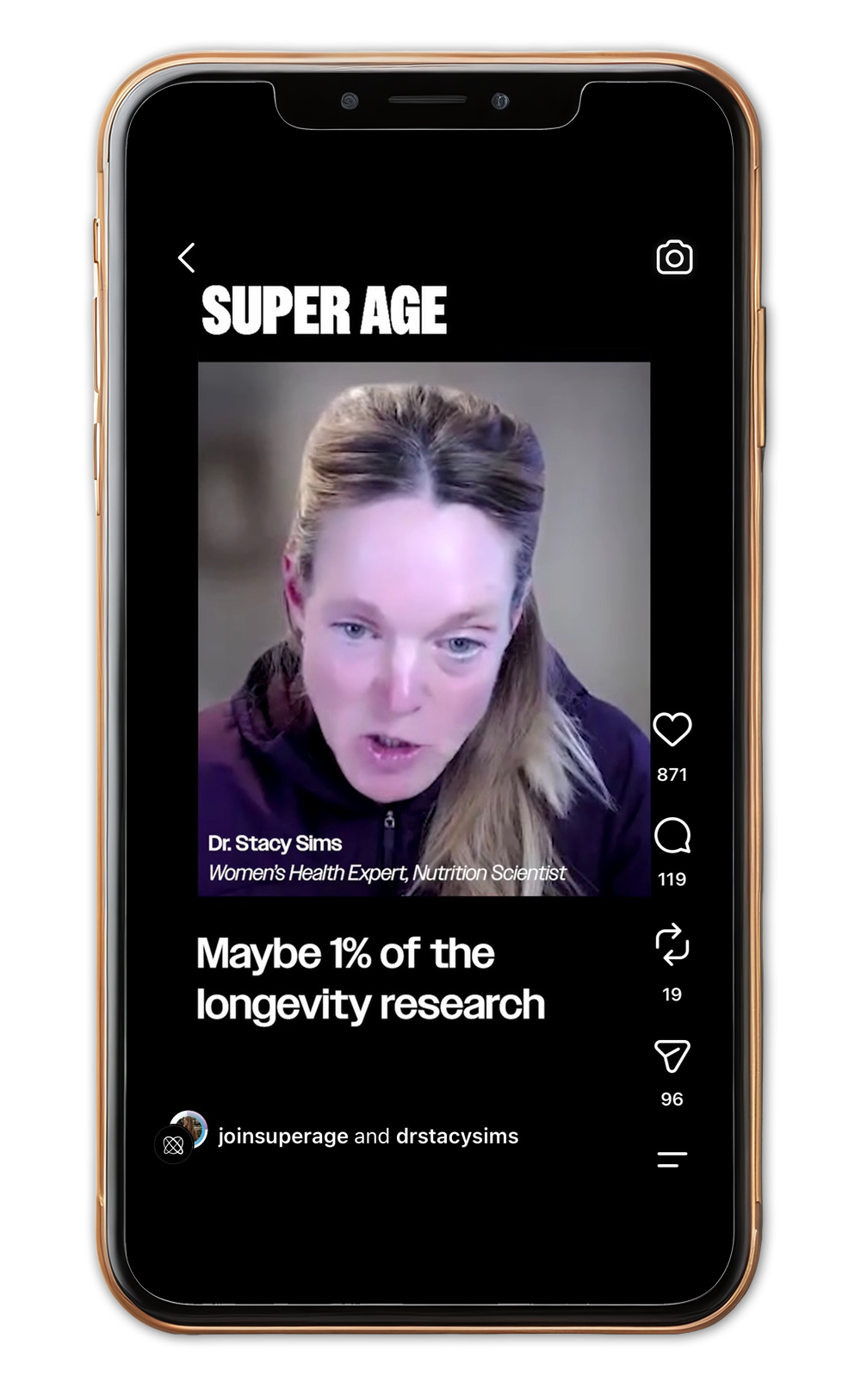
That gap is now reproducing itself in longevity research. It’s the fastest-growing field in health, and by my read of it, maybe 1% of longevity research is done on active women (if that).
So the next time you read a longevity protocol, ask one question first: whose body was this built on?
Because the answer changes the advice. Intermittent fasting (which is different from time-restricted eating!), combined with consistent training before breaking the fast, can lead to any or all of the following in active women:
-
Chronobiological phase shift resulting in hormonal dysregulation, especially leptin
-
Suppressed thyroid
Despite all of the above, it’s still commonly sold as a universal fat-loss lever.
And when it comes to strength training, those of us saying "lift heavy, 3-6 reps!" get consistent pushback from the strength bros insisting that you don't need to lift heavy to build lean mass. Yes, I know this: match total volume and you get similar hypertrophy (you can build muscle at any rep range). But here's the nuance they're missing—the sex differences. Build the muscle, of course, but just know what to protect first. As women age, our sex hormones decline and we lose strength and power first, then cell death of lean mass follows.
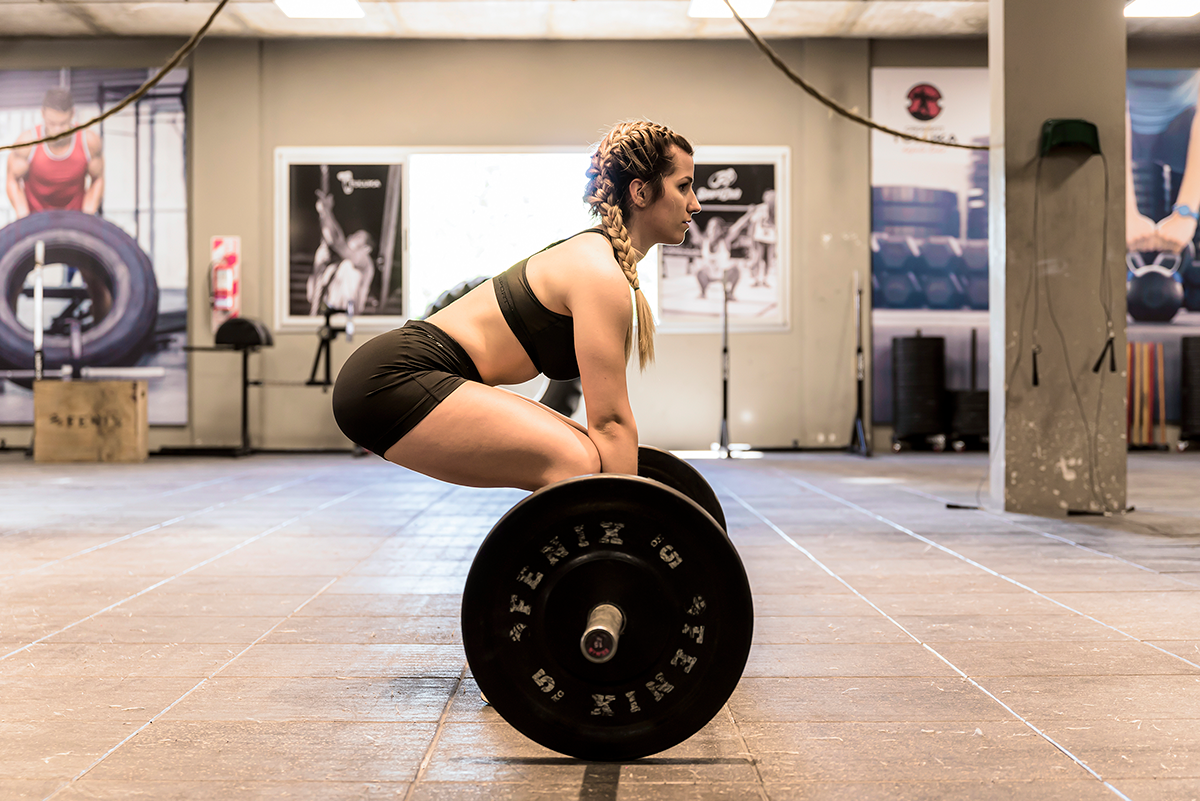
The other important point is brain health, especially cognitive decline. Women are roughly two to three times more likely to develop Alzheimer's disease than men after age 65, and we see that heavy lifting (80-90% of 1 rep max) improves neural connectivity of the prefrontal cortex, the area associated with cognitive function.
And I’ll be blunt about what worries me next: AI. Ask any chatbot about female physiology and it summarizes what already exists, which is male data. This means the research gap stops merely persisting and starts scaling.
What I’m Doing About It
I’m writing a book about healthspan for active women, which is due to be published next year. I’m building Collective X Health with three co-founders to fund female-specific research and give coaches, researchers, and active women somewhere to search that only surfaces evidence that’s actually about women.
I’m also doing something that I’m equal parts excited and nervous about. On November 7 I’ll be in New York as a founding athlete at the Super Age Games, which is essentially a longevity fitness competition: eight trials measuring the markers that actually predict healthspan, such as grip strength, balance, working memory, and endurance under load. Researchers from the Buck Institute will be collecting data from everyone who competes.
There were two good reasons why I said yes to this. The first is straightforward: I’m competitive, and I wanted something that would force me to work on my weaknesses. The second is the one that really matters. Every woman who lines up there becomes a data point on active female aging, which is the exact population the research keeps overlooking. That dataset doesn’t currently exist, and we’re going to go help change that. The marker I’m most nervous about is cognition, which is also the one my grandmothers absolutely aced.
While I’d love to live as long as the women in my family did, I’m not chasing longevity for the number. I’m chasing the version of me who, more than 50 years from now, is still riding my bike, still arguing about the research, and still telling someone to sit down because we’re playing cards.
That’s the goal. The training is just how we get there.

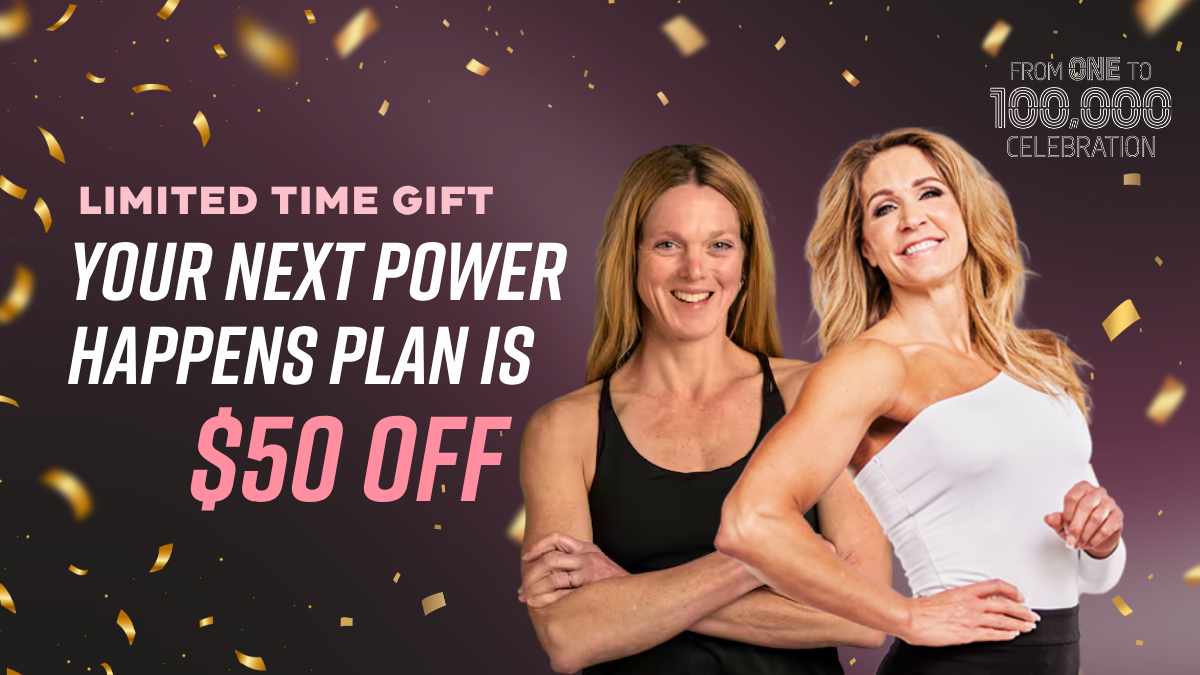
Train Strength and Power with Power Happens, Now $50 Off
If you’re keen to build strength and power, you might be interested in the Power Happens programs I’ve built with my friend and trainer Hailey Babcock. Every program features progressive strength work built specifically for midlife women—and there’s something for everyone, whether you’re a beginner or have been lifting for years. From today (August 5) until Sunday, August 9, every program in the series is $50 off. Browse the programs.
Join Me at the Super Age Games
If the Super Age Games sounds like something you’d enjoy too then you can join me! You can buy tickets via this link and join my team, Stacy Sims’ Canyon Ranch SuperAgers. If you sign up before August 15 you can save $100 on your entry by using the code STACYSIMS. I’ll also be hosting a weekend retreat in the lead-up to the Super Age Games, although this has sold out already! I’ll be sure to let you all know if another is scheduled.
Closing the Altitude Research Gap
Women are 40% of mountaineers but appear in less than 7% of high-altitude research. ISHARE is the world’s first all-women’s high-altitude medical expedition, which plans to climb Putha Hiunchuli (7,246m/23,773ft) in Nepal in September 2027 to collect urgently needed data on how women’s bodies perform at high altitude. You can learn more about the expedition and make a donation here.
Until next time,

Forwarded this newsletter? You can join my community here!