In my last newsletter, I wrote about perimenopause and menopause hormone therapy: how to spot the signs of perimenopause, how to find the right healthcare provider, and what to expect when you start MHT. Today, I’m picking up where I left off with the part I feel most strongly about: what active women should know and consider about MHT.
MHT is a tool, and a good one, but—as with so many things—lifestyle can be just as powerful (if not more so for some) and needs to be considered too.
MHT Isn’t the Same As Your Own Hormones
As I mentioned in Part 1, most experts now use the term MHT rather than HRT, because the goal isn’t to “replace” the hormones you once had. That distinction is the root of a lot of confusion.
The hormones in MHT don’t behave exactly like the ones your ovaries made. Treatment doses aim for a steady, low physiological level, not the higher pulses and rhythms of your natural cycle, and your body responds differently to them. So replacing some estrogen doesn’t mean restoring everything estrogen once did.
How you take estradiol matters:
-
Pills (oral) are processed by the liver before reaching the rest of the body, so much of the estradiol is converted to estrone, a weaker estrogen. The liver also makes more clotting proteins, which slightly raises the risk of blood clots.
-
Patches and gels (transdermal) absorb through the skin straight into the bloodstream, keeping a more natural balance of estrogens with little effect on the liver.
MHT can ease menopausal symptoms and protect tissues like bone and the vaginal and urinary tract, but it isn’t a like-for-like replacement.
That’s why the research shows MHT is first and foremost a tool for symptom relief, with bone protection as its clearest long-term benefit. The literature doesn’t show it builds muscle, drives fat loss, or prevents heart disease (one major trial suggests it may slow early arterial changes when started soon after menopause, but that’s not the same as prevention). This is where the lifestyle levers like sleep, exercise, and nutrition really come to the fore (and if you'd like to dive deeper into this, my Menopause 2.0 course is on sale with 40% off until Friday).
What the Research Actually Shows
Very few trials have tested MHT, exercise, and both together. Most of what we know is pieced together from MHT trials, exercise trials, and a handful of combined studies. But the pattern is consistent: MHT mostly eases menopause-related symptoms, while lifestyle factors, especially resistance training and diet, drive positive change. The effects appear to add together rather than one replacing the other.
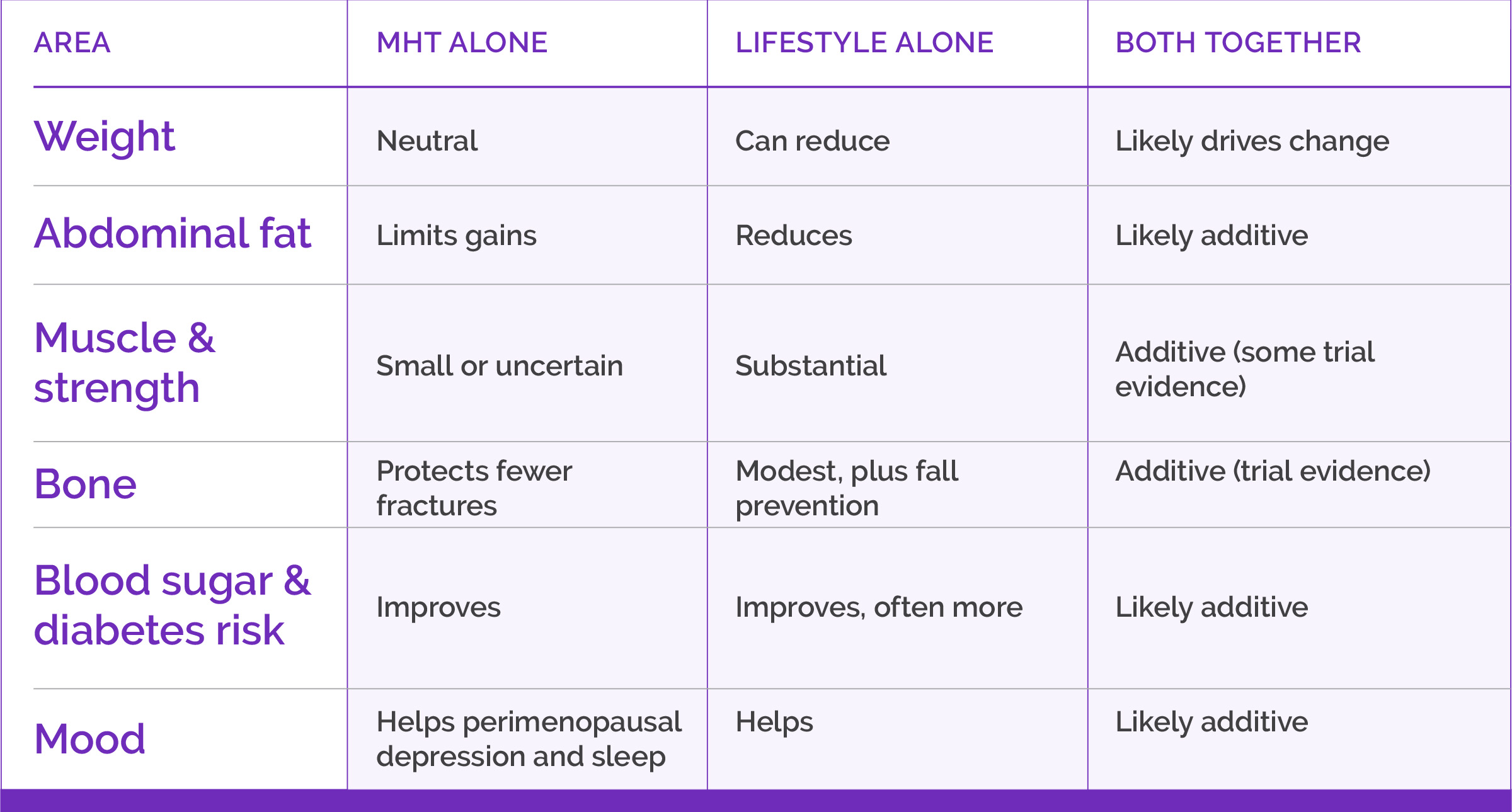
Let’s look at some of the most common areas where women experience changes during the menopause transition, and how MHT, lifestyle, or both can help:
Body composition: MHT doesn’t cause weight gain, but it isn’t a weight-loss treatment either; a Cochrane review found no effect on body weight. It does appear to limit the menopausal shift toward abdominal fat, cutting it by about 7% in one large meta-analysis.
Muscle and strength: On its own, MHT has a small or uncertain effect. A meta-analysis of 12 trials found no significant effect on muscle mass, and in the Women’s Health Initiative, early lean-mass preservation had disappeared by six years. A separate meta-analysis found women on MHT were about 5% stronger. Training remains the main driver of muscle, strength, and power, and the two may work best together: in one small trial in early postmenopausal women, those who combined MHT with high-impact jump training saw the biggest gains in muscle power.
Bone: This is where the MHT evidence is strongest. In the Women’s Health Initiative, it reduced fractures by about a quarter and hip fractures by a third. A 2016 meta-analysis of 28 randomized trials found similar reductions, with the greatest benefit in women who started before age 60, and the more recent KEEPS trial showed that both low-dose oral estrogen and an estradiol patch maintained bone density in recently menopausal women. The benefit appears to fade after treatment stops. Exercise also adds something MHT can’t: balance training, which cuts the rate of falls by about a quarter, preventing many fractures before they happen. Note: guidelines generally recommend MHT for bone mainly in women who also have menopausal symptoms, not as a first-line osteoporosis drug.
Metabolic health: In the Women’s Health Initiative, estrogen plus progestin reduced new cases of diabetes by about 21%; estrogen alone showed a smaller 12% reduction that fell just short of statistical significance. MHT also reduces insulin resistance. With heart health, the evidence is mixed. MHT didn’t slow arterial wall thickening in recently menopausal women in the KEEPS trial, but in the ELITE trial, oral estradiol did slow it when started within six years of menopause. Either way, MHT isn’t prescribed to prevent heart disease.
Mood: For depression that starts around the menopause transition, transdermal estradiol has shown antidepressant effects in trials, particularly in women who also have hot flashes. In one trial, transdermal estradiol with intermittent micronized progesterone helped prevent depressive symptoms in women early in the menopause transition. But for postmenopausal women with established depression, estrogen isn’t an effective antidepressant, and for clinical depression at any stage, antidepressants and talk therapy remain the front-line treatments. Better sleep from fewer night sweats helps mood too, though some women find the progestogen worsens it. Exercise and menopause-specific CBT can both help.
Here’s how it all stacks up:
The Testosterone Question
Testosterone is having a moment online, sold as a fix for everything from energy to body composition. Dr. Kiki Silver, the physician who joined me in Part 1, and I agree on this one. “Sex drive and body composition are much more complex than one hormone level,” she says.
According to a global consensus statement endorsed by leading menopause and endocrine societies, the only evidence-based reason to prescribe testosterone is low libido that causes personal distress in postmenopausal women. Some newer observational studies hint that adding testosterone to estrogen therapy may help with fatigue, joint pain, and memory, but they lacked a comparison group, and randomized controlled trials are only now getting underway. The trials so far don’t support using it to improve mood, wellbeing, bone density, body composition, or strength, and there isn’t enough evidence to prescribe it for energy or cognition.
And a reminder for anyone competing: testosterone is banned by WADA and USADA, in and out of competition (although athletes with a medical need can apply for a Therapeutic Use Exemption).
If You Can’t or Don’t Want to Take Hormones
In Part 1, I covered who is not a candidate for MHT, including women with a history of breast cancer, blood clots, or stroke. Others simply prefer not to. Non-hormonal options are sometimes dismissed as “just symptom relief.” But symptom relief is what MHT does best too, so these deserve a fair hearing.
MHT is still the most effective treatment for hot flashes: a Cochrane review found it cut their frequency by about 75% compared with placebo. Among non-hormonal options, the newer neurokinin receptor blockers, fezolinetant (Veozah) and elinzanetant (Lynkuet), come closest, though no trial has compared them directly with MHT. Older repurposed drugs, such as certain antidepressants and gabapentin, typically offer a modest benefit over placebo. The framework here is The Menopause Society’s 2023 position statement on non-hormone therapy, plus newer drug approvals since then.

Prescription Options
Fezolinetant (Veozah): Calms the brain’s temperature-control center, which becomes overactive when estrogen falls, and cuts hot flash frequency and severity within weeks. It carries an FDA boxed warning for rare liver injury, so you’ll need regular liver blood tests; stop and call your doctor if you notice unusual fatigue, nausea, itching, yellowing skin or eyes, dark urine, pale stools, or right-sided abdominal pain.
Elinzanetant (Lynkuet): FDA-approved in October 2025, it reduced hot flashes for up to a year in trials and improved sleep. It’s taken at bedtime but can cause drowsiness, so check with your prescriber before early-morning sessions. It also requires liver blood tests before you start and after three months, and if you could still become pregnant, you’ll need reliable contraception while taking it.
Low-dose antidepressants (SSRIs and SNRIs): Paroxetine 7.5 mg (Brisdelle) is FDA-approved for hot flashes, and others like venlafaxine are used off-label. The benefit is modest, but at standard doses they can also help mood; if you take tamoxifen, avoid paroxetine and fluoxetine.
Gabapentin: Particularly helpful for night sweats when taken at bedtime. Dizziness and drowsiness may matter for balance-dependent sports.
Oxybutynin: Reduced hot flashes in trials, but long-term use raises concerns about cognition in older women. It also reduces sweating, so watch for overheating in hot-weather training.
Non-Drug Options, Herbals, and Supplements
CBT and clinical hypnosis both have good evidence, but they work differently: hypnosis reduces how often and how intensely hot flashes happen, while CBT makes them less bothersome and disruptive.
Most herbals and supplements are unproven, and The Menopause Society doesn’t recommend them for hot flashes. Black cohosh and red clover haven’t consistently beaten placebo. Soy isoflavones show a modest, inconsistent benefit. St. John’s wort interacts with tamoxifen, the contraceptive pill, blood thinners, and antidepressants. Multi-herb “menopause blends” are rarely tested as the actual combination, and doses are often unclear. If you want to try one, choose a single product with a stated standardized dose, give it 8–12 weeks, and tell your healthcare provider.
How Long Should You Stay on MHT?
There’s no fixed deadline. Guidelines from The Menopause Society and NICE have moved away from the old “lowest dose for the shortest time” rule.
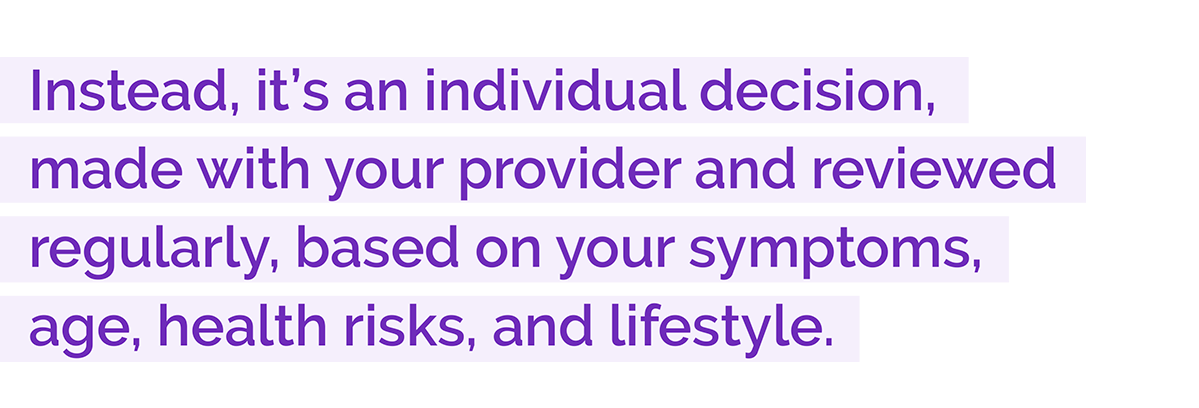
But “no deadline” isn’t the same as “every woman, for life.” Long-term studies are still underway, and we don’t yet have the full picture of decades-long use. It’s also hard to tease apart what’s driven by menopause and what’s simply aging. Even on MHT, metabolic, cardiovascular, bone, and muscle health will decline faster without the fundamental lifestyle foundations in place.
Focusing on What Matters Most
We care about healthspan, not just lifespan: how well you live, not just how long. Nobody wants to spend their later years frail and dependent. MHT can be a valuable part of that picture, especially for symptom relief and bone health, and if exhaustion, poor sleep, or low mood are making consistency impossible, that’s exactly where it can earn its place. But long term, the biggest levers are still the ones you pull every day: lifting heavy, training smart, fueling enough, and protecting your sleep.
If you want the full playbook for this stage of life, Menopause 2.0 puts the science into practice, and it’s 40% off until Friday (November 6).
Until next time,
Please note: This newsletter is for education only and isn’t individual medical advice. Please talk to a healthcare provider who’s knowledgeable about menopause before starting, changing, or stopping any treatment.
Forwarded this newsletter? You can join my community here!