One of the questions I’m often asked is: How connected are building muscle and building strength?
The short answer: they’re related, but not the same. You can increase strength without dramatically increasing muscle, and you can increase muscle without seeing proportional gains in strength. Research shows that early strength gains are largely driven by neural adaptations rather than muscle growth, while hypertrophy contributes more over time and eventually plateaus.
This distinction matters, especially for women, because the conventional advice you’ve probably heard:
-
Strength: 3–5 reps
-
Size: 6–12 reps
-
Endurance: 15+ reps
…only scratches the surface. In fact, newer evidence, including work led by Brad Schoenfeld, shows there is no single optimal rep range for muscle growth, as long as the stimulus is sufficient.
Women Are Not Small Men®—Especially in the Gym
Women respond differently to resistance training than men. We’re generally more fatigue-resistant, recover faster between sets, and often tolerate higher total training volumes. At the same time, gains in muscle mass can be slower, particularly if we’re under-fueling, due to differences in muscle fiber behavior and anabolic signaling.
Hormones matter, but not in the rigid way they’re sometimes presented online.
Estrogen supports muscle repair, collagen synthesis, and neuromuscular coordination, which helps explain why some women may feel stronger or more powerful at certain times during their cycle. It also helps explain why we see a precipitous drop in power with an increase in soft tissue issues during perimenopause. However, responses are highly individual. Rather than prescribing training strictly by menstrual cycle phase (as we once used to), current best practice is to use individual symptoms, recovery, and performance feedback to guide when to push and when to pull back. Fixed calendar rules aren’t supported by the evidence—and they’re not how most women actually experience training. (I wrote more about this evolution here).
For peri- and postmenopausal women, declining estrogen makes resistance training even more important for maintaining muscle quality, strength, and bone density. Heavy and explosive loading—appropriately progressed and well-fueled—remains one of the most powerful tools we have for long-term health and function.
The best strength plan for women isn’t about chasing a single rep range. It’s about strategically managing load, volume, recovery, and fueling over time, in a way that supports performance, robustness, and longevity.
Dialing in Intensity (and Managing Expectations)
Everything in training exists on a continuum.
Heavier loads with lower reps tend to bias strength adaptations, but that doesn’t mean muscle size won’t change, especially early on. Likewise, moderate or higher reps can support strength gains when effort and intent are high.
Early improvements in strength are largely driven by neural and skill adaptations, that is, when you’re new to strength training the gains typically happen faster as your nervous system learns to recruit muscle more efficiently. As your training age increases, gains slow and plateaus become part of the process. That’s not failure; it’s part of the physiological process.
This is also where the law of diminishing returns matters. Beyond a moderate dose, additional strength training often yields minimal added benefit while increasing fatigue, recovery demands, and injury risk, especially when layered on top of endurance training or high life stress.
Strength, Muscle, and Load: What Actually Matters
If your primary goal is strength, higher loads lifted with intent, good technique, and adequate rest are most effective. Longer rest periods allow force and power output to stay high across sets.
When it comes to muscle growth, the science has shifted. Muscle can grow across a wide range of loads—from roughly 30–85% of maximum—as long as mechanical tension is sufficient and sets are taken close enough to failure. There is no single “hypertrophy rep range.”
Importantly, higher reps are not just about muscle size. We often use them intentionally to:
-
Learn or refine movement patterns
-
Build strength through larger ranges of motion
-
Increase tissue tolerance during rehabilitation or return-to-training
-
Manage joint stress while still creating meaningful stimulus
-
Support sport-specific demands under fatigue
In these cases, the rep range serves skill, capacity, or robustness.
Using Effort—Not Max Testing—to Guide Training
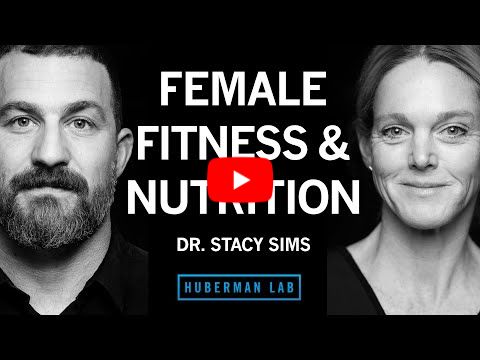
Remember that you don’t need to test a one-rep max to train effectively. Autoregulated approaches like Reps in Reserve (RIR) allow intensity to adjust day-to-day based on sleep, stress, and fueling, while still ensuring sufficient stimulus. For example, if a set is prescribed at 2 RIR, you stop when you feel you could complete two more high-quality reps. (I talked about this on the Huberman Lab podcast - see below.)
|
Volume, Recovery, and the Minimum Effective Dose
Strength gains can occur with surprisingly modest volumes, particularly in active women. Studies show that even one to two well-structured sessions per week can maintain or improve strength when overall training load is high.
Once the minimum effective dose is met, additional work should serve a clear goal, not the assumption that more is always better. This approach supports consistency, recovery, and long-term health and performance.
Recovery matters. Adequate energy intake and sufficient protein—around 30 g with enough leucine—support muscle repair and adaptation.
Train Smart, Train Long
Muscle adapts faster than connective tissue. Tendons and ligaments need time to catch up, which is why rapid jumps in load increase injury risk, especially during periods of hormonal change.
If you’re new to lifting—or returning after time away—prioritize technique, control, and range of motion before chasing heavier loads. Build your base first. Ideally, if time and budget allow, work with a qualified trainer so you can be sure you’re learning correct technique. Strength built gradually is strength you keep, because the goal isn’t just to get strong—it’s to stay strong for life.
Key Takeaways by Life Stage
Active Women (20–40)
-
Strength gains come quickly early on; more volume isn’t better
-
Prioritize good technique, adequate load, and consistency
-
Let strength training support your sport and daily life, not compete with it
Active Women in Perimenopause/Menopause
-
Expect fluctuations in recovery, strength, and load tolerance
-
Focus on high-quality strength work
-
Fuel adequately (especially protein) and adjust training based on symptoms, not rigid rules
Postmenopausal Active Women
-
Strength training is essential for muscle, bone, and power preservation
-
Heavier loads matter, but total volume can stay modest
-
Two to three well-designed sessions per week can deliver meaningful results when recovery is prioritized

Get Stronger with Power Happens
If you’re keen to start following a strength training program, check out Power Happens, a program I created with friend and trainer Hailey Babcock. There are a variety of plans available, all of which are designed for women 35+.
Should You Take Creatine?
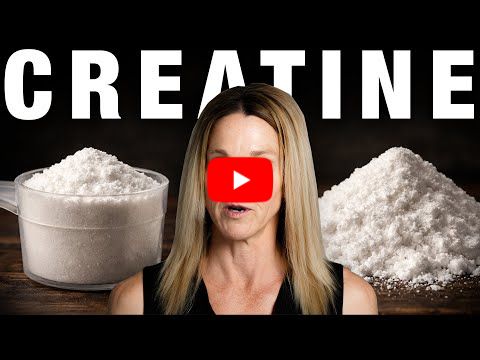
In this YouTube clip, I discuss creatine’s real risks and benefits for women in midlife, including why the brain is energy-demanding and how creatine can support mood, focus, and circadian rhythm under sleep loss, alongside muscle performance. I also talk through practical dosing (including when a simple daily 3-5 g makes sense), address common concerns like hair loss and water weight, and touch on gut integrity and broader health applications. I also share why, when it comes to supplements, my big three are creatine, omega-3s, and vitamin D.
|
Learn More About Creatine
My Microlearning course on creatine is designed to teach you all you need to know about this powerhouse supplement in about three hours of interactive learning. The course includes a workbook, summary videos, Q&A, and more. It counts towards Continuing Education Credits too. Newsletter subscribers get 15% off the course—just use this link to sign up!
HIIT vs SIIT
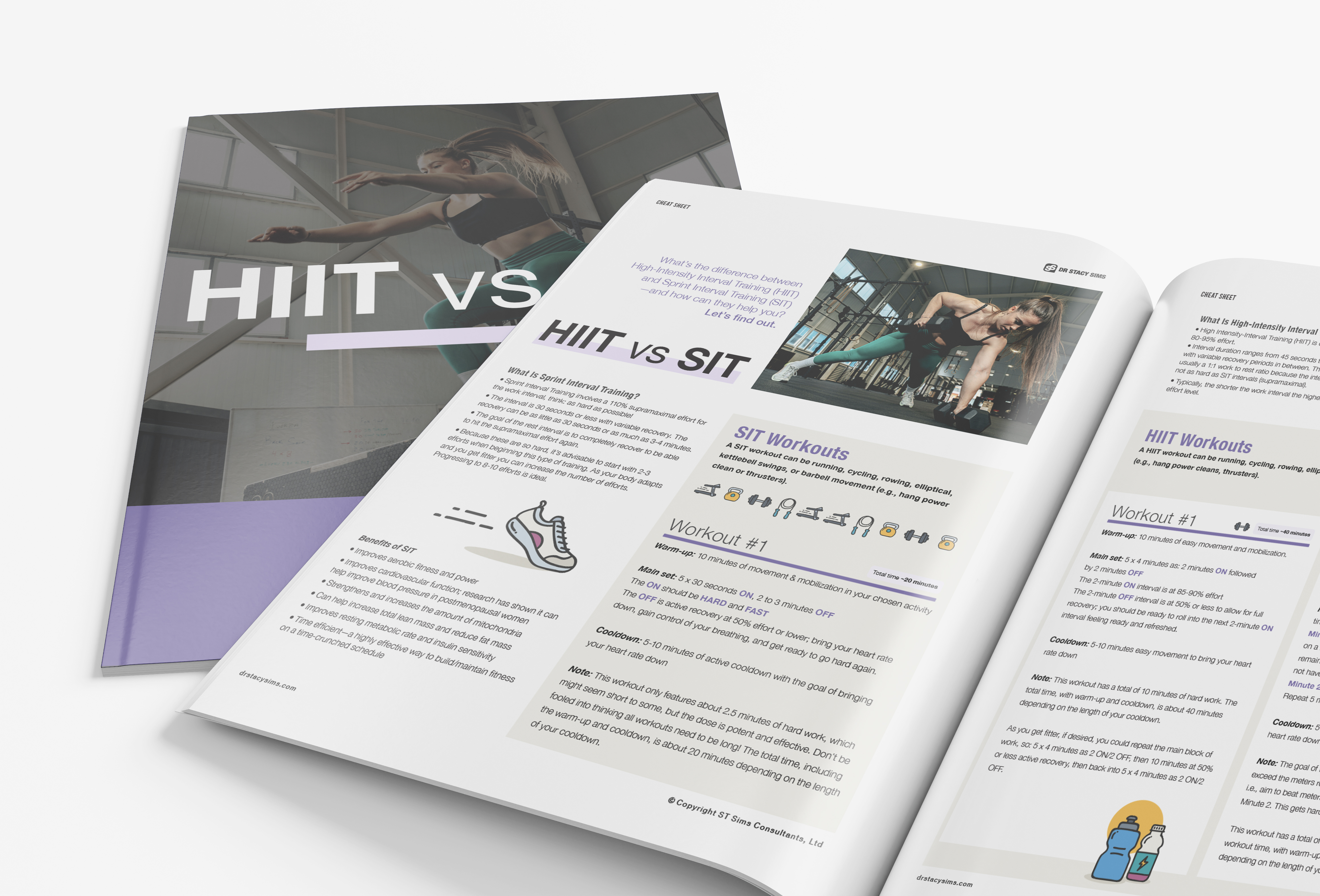
My latest Cheat Sheet explains the differences between HIIT (High-Intensity Interval Training) and SIT (Sprint Interval Training), as well as the key benefits, when to do them, and some example workouts. As a newsletter subscriber, you can download it for free here.
Until next time,

Forwarded this email? You can join my newsletter community here!