Women live longer than men. On paper, we “win” longevity. But here’s the uncomfortable truth: many women are living longer, but those years are impacted by cognitive decline, cardiovascular disease, frailty, and loss of independence, especially after menopause. The real question becomes less about lifespan (the number of years we live) and more about healthspan, the number of years we’re strong, capable, cognitively sharp, and metabolically resilient. And there’s a gap.
Lifespan vs. Healthspan: The Hidden Divide
Statistically, women outlive men by several years, but those additional years are often marked by:
-
Loss of muscle and strength
-
Increased visceral fat
-
Accelerated bone loss
-
Rising cardiovascular risk
-
Greater rates of Alzheimer’s disease
Estrogen has wide-reaching protective effects, particularly on blood vessels, brain metabolism, skeletal muscle, and bone turnover. When it declines in perimenopause and menopause, our physiology shifts dramatically. Women’s longevity numbers still look “good,” but they mask functional decline.
And for me, longevity has never meant simply being alive longer. It means preserving the capacity to think clearly, move powerfully, recover well, and remain independent across decades.
Frailty Is Not Inevitable, But It Is Predictable
Across the menopause transition, women experience:
-
Faster loss of type II muscle fibers (our power fibers)
-
Increased central adiposity
-
Reduced anabolic sensitivity to protein
-
Heightened inflammation
That combination drives frailty and cardiometabolic disease risk. And this is why the “just move more” advice falls short. Yes, exercise protects us, but only if it evolves as we do. What worked at 30 will not protect you at 50.
If You’re Highly Active, You Could Be Aging Differently
Here’s where the conversation gets more interesting. Exercise doesn’t just “burn calories.” It can also change gene expression. Through epigenetic signaling, regular training alters how genes involved in inflammation, mitochondrial function, glucose metabolism, and brain health are expressed. And different types of exercise send different signals.
For example, resistance training improves insulin sensitivity and muscle protein synthesis signaling. High-intensity intervals stimulate mitochondrial biogenesis (the process of making new mitochondria). Strength work can support bone remodeling, while adequate fueling can support thyroid and reproductive axis integrity. While your genes stay the same, your environment (e.g., training, stress, sleep, nutrition) impacts which ones are turned up, turned down, or turned off.
When you exercise intelligently—and fuel appropriately—you can start to create a different aging trajectory. But if you under-fuel, over-train, or rely solely on long slow cardio (or just one type or intensity of exercise), you may be accelerating aging instead of slowing it, the very opposite of what we think exercise is doing for us.
So What Do You Do?
Mix it up! Variety needs to become your new best friend from your 40s onwards. If you’re someone who only does steady-state long runs or rides, mix in some HIIT work and add some lifting to your weekly routine. If you’re someone who lifts plenty, make sure you’re also doing some cardio and HIIT. Support your activity levels with adequate sleep, recovery, fueling, and social connection (social isolation is now recognized as a powerful risk to long-term health).
It’s also important to look at your family history. Is there a history of cardiovascular disease, cognitive decline, osteoporosis, or type 2 diabetes? If so, then you may want to adjust your training and nutrition to account for those variables.
If cognitive decline runs in your family, prioritize high-intensity work, sleep, adequate carbohydrate availability, and creatine to support brain energetics.
If cardiovascular disease is your concern, focus on lean mass retention, blood glucose control, interval training, and minimizing visceral fat accumulation.
If osteoporosis is a risk, heavy resistance training and impact loading are non-negotiable (you can learn more at OSTEO-GAINS and in this article on bone health).
If you want some objective markers, you can track key measurements, such as:
-
Lean mass
-
Grip strength
-
VO₂ max
-
Fasting glucose and insulin
-
Lipids
-
Bone density
Tracking these markers over time can help to give you an insight into your healthspan. Working to improve them is one of the greatest gifts you can give your future self.
Longevity Isn’t About Biohacking
Women already live longer than men. The data is clear on that. But longevity statistics don’t reflect muscle quality, bone density, mitochondrial function, or cognitive processing speed—and those are the variables that determine whether you remain independent and capable as you age.
If we want to age better, we have to stop confusing novelty with physiology. Longevity isn’t built through chasing fleeting fads, but on the foundations of exercise, recovery, minimizing stress, adequate sleep, nutrition, and social connection. It can become all too easy to chase the latest biomarker trend while the true pillars of a long and healthy, happy life are overlooked. For women, especially through perimenopause and beyond, longevity is about preserving skeletal muscle, maintaining power output, supporting metabolic flexibility, protecting bone remodeling, and sustaining cognitive resilience as estrogen fluctuates.
Longevity is not about avoiding aging. Aging will happen. The question is whether you build enough physiological reserve that the predictable declines of menopause and later life do not tip you into frailty. Women don’t need more hacks. We need female-specific strategies that protect function.
That is the longevity conversation I’m stepping fully into in 2026. Over the coming months, I’ll be diving deeper into what the research says about building healthspan in women: how to train, how to fuel, how to recover, and how to measure whether you’re truly preserving function across the decades of your life. Because the real goal isn’t simply adding years to your life. It’s maintaining the strength, cognition, and capacity to fully live those years on your terms.

ICYMI - Your Creatine Questions Answered
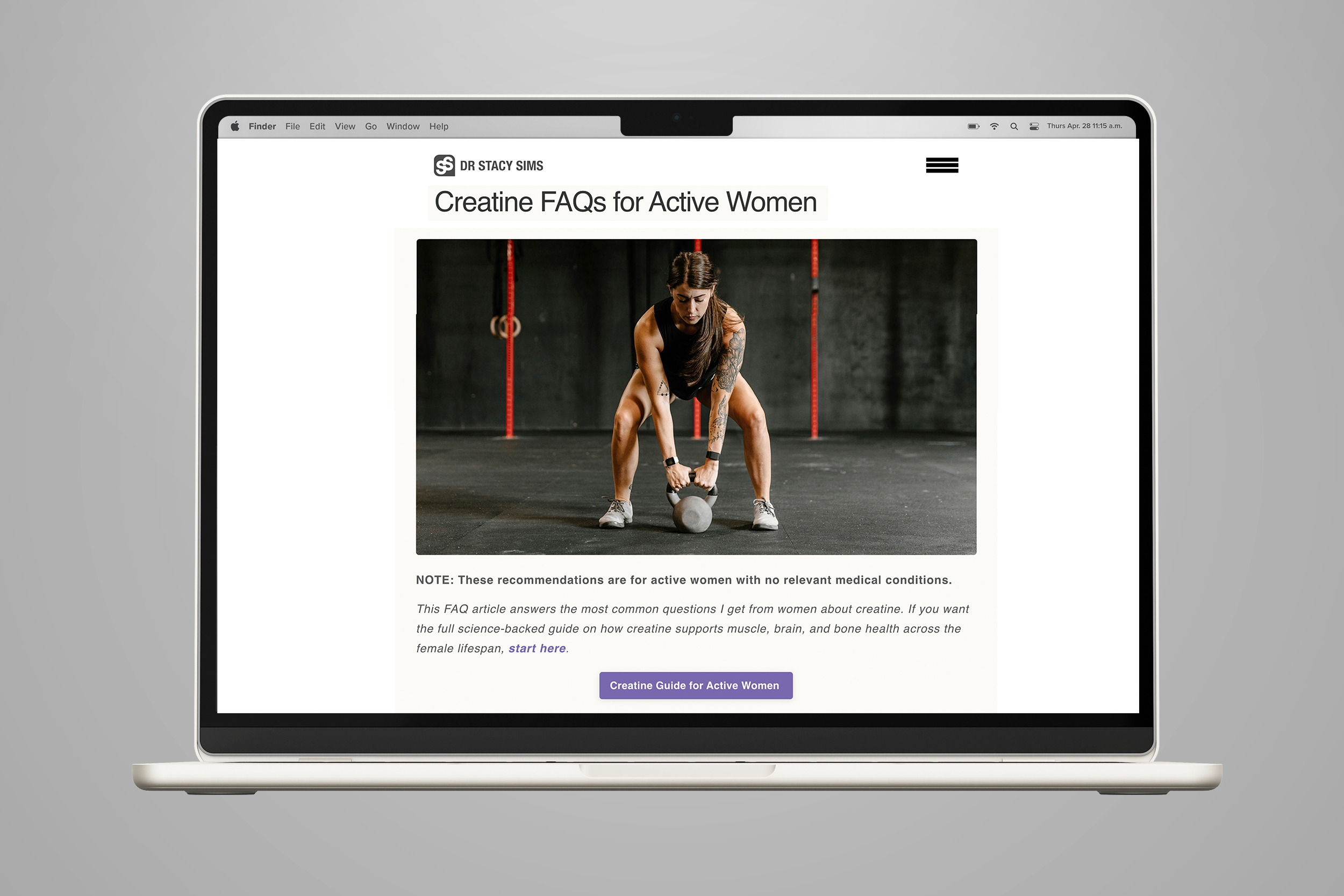
In case you missed it, here’s a collection of creatine FAQs I often get from active women. Creatine is the one supplement I recommend for women, regardless of age. If you’d like to learn more, you can also check out my Microlearning on creatine, which is designed to teach you all you need to know about this powerhouse supplement in around three hours of online interactive learning.
Age Well with Strength Training
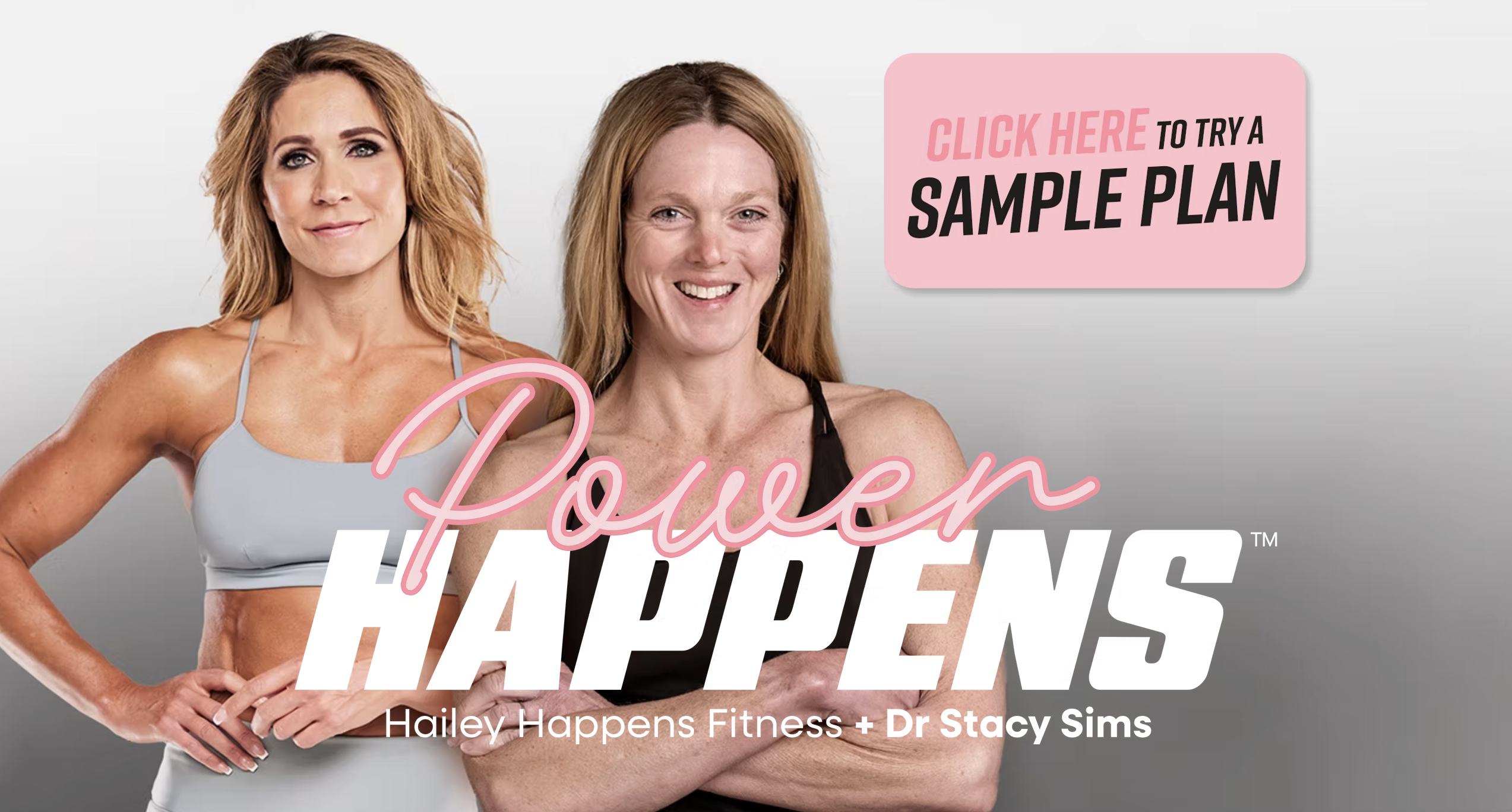
Arguably one of the best, most effective ways to age well is strength training. I’m often asked which programs I recommend for women aged 40+. I teamed up with my friend and colleague Hailey Babcock to create an online strength training program specifically for mid-life women called Power Happens. This intelligently designed program will set you up to be strong and independent for decades to come, no matter where you are in your strength journey now.
Join Our Q&A to Support the Ellie Fund
I’ll be hosting a special Zoom Q&A on March 10 at 7 p.m. EST with Dr. Amy Comander, a Harvard breast oncologist and advocate for using exercise to support recovery during and after cancer treatment. The Q&A session—Fuel, Move, and Lift with Dr. Stacy Sims—is a fundraiser for Amy’s Boston Marathon, which she’s running to benefit the Ellie Fund. The fund provides vital support services for breast cancer patients, helping ease everyday stresses so they can focus on family, recovery, and healing. We apologize for the incorrect link in the last newsletter. You can sign up for the Q&A here and make donations to the Ellie Fund here.
Beware of Fake Stacy - Correction to Contact Address
In the newsletter from February 11, we alerted you to the increase in unauthorized AI-generated “books” using my name and work and asked that if you see any books or work that look unauthorized to get in touch. The email to get in touch with us was incorrect; please use support@drstacysims.com. Please be aware that I’ve only written two books: ROAR and Next Level.
Until next time,

Forwarded this newsletter? You can join my newsletter community here!