You might have noticed there’s a word you can't escape right now: longevity. Everywhere you turn there seems to be supplements, podcasts, and biohacking protocols all promising to help you live longer. But longer isn’t the same as better. And here's the thing nobody's telling you: women already live longer.
On average, we outlive men by about five years globally, but much of that time is spent in poor health with major functional decline. For women especially, chasing longevity without understanding what you're actually chasing can send you in entirely the wrong direction. The answers for active women aren’t complicated. It largely comes down to how you train, how you eat, and how you think about the years ahead. Let’s dive in.
The Three Terms You Need to Know
Let's define three of the key terms that are important in any longevity conversation:
Longevity is simple: it's the total number of years from birth to death. The current cultural obsession with longevity is largely about extending that number and pushing the endpoint further out. For women, though, this framing is almost irrelevant. We already live longer than men. What we don't necessarily have is better years; a significant chunk of that extra time is spent in poorer health and declining function.
Healthspan is the metric that actually matters: the years lived in good health, with full mobility, independence, and cognitive function. It ends when chronic disease, disability, or significant functional decline moves in. Cardiovascular disease, type 2 diabetes, dementia, and osteoporosis are some of the most common conditions that compress healthspan. And here's the data point that should wake everyone up: globally, the gap between how long we live and how long we live well has widened to nearly a decade. In the US, people spend an average of 12.4 years in poor health at the end of their life. For women, that gap is even larger, typically because menopause accelerates bone loss, shifts body composition, and strips away estrogen's protective effects on cardiovascular and metabolic function all at once. Modern medicine has become good at keeping us alive; it is not yet as good at keeping us alive and well.
Peakspan is a new concept, and it's the one I find most compelling for active women. Research published earlier this year in Aging and Disease defines peakspan as the age interval during which an individual maintains at least 90% of their peak functional performance in a given physiological or cognitive domain. And what the researchers found is striking: most biological systems hit their peak capacity in our 20s and 30s, which means peakspan is remarkably short relative to total lifespan. The result? Most of us spend the majority of our adult lives in what the paper calls a “healthy but declined" state, which is a significant functional gap that neither longevity nor healthspan metrics capture.
Aging Is As Unique As You Are
Here's the critical piece from that research that highlights just how variable our own peakspan can be:
“When interpreting these data, it is crucial to acknowledge the vast individual variability. Genetics, sex, and lifestyle factors (nutrition, physical activity, socioeconomic status) significantly modulate both the absolute peak achieved and the rate of subsequent decline.”
There’s even more research showing us just how wide that individual variability actually is. A large-scale proteomics study published in Nature Medicine in 2025 that analyzed blood plasma data from nearly 45,000 people found that two people born in the same year can be up to biologically 15 years apart in age. In short, they might share the same birthday but have a completely different cellular reality, vastly different metabolic function, differing levels of inflammation, and different regenerative capacities.
This research also showed that biological aging doesn't decline in a smooth, linear way. It happens in distinct shifts—at ages 41, 60, and 67. It’s worth noting that these windows map almost perfectly onto the hormonal transitions most women are navigating.
Stay in Your Peakspan
When you reframe the goal from living longer to extending the time you spend at your best, the entire strategy shifts.
It's not about anti-aging, nor is it about adding years to the end of your life when you're already declining. It's about compressing that decline window; staying in your peakspan as long as possible, and maintaining meaningful healthspan well beyond what the average statistics predict.
For active women, this is actually good news. Because the levers that extend peakspan and healthspan are things you can control: how you train, how you fuel, how you recover, and how you manage the hormonal changes that come with being a woman.
In my next newsletter, we'll get into exactly what that looks like in practice—and how your specific training history shapes the strategy that's right for you.
 Longevity Advice Women Actually Need
This was one of the first articles I wrote on longevity after seeing how much of the advice out there is male-centered. In it, I explain some of the key biological differences that may help explain why women tend to live longer.
Healthy Shouldn’t Be This Hard
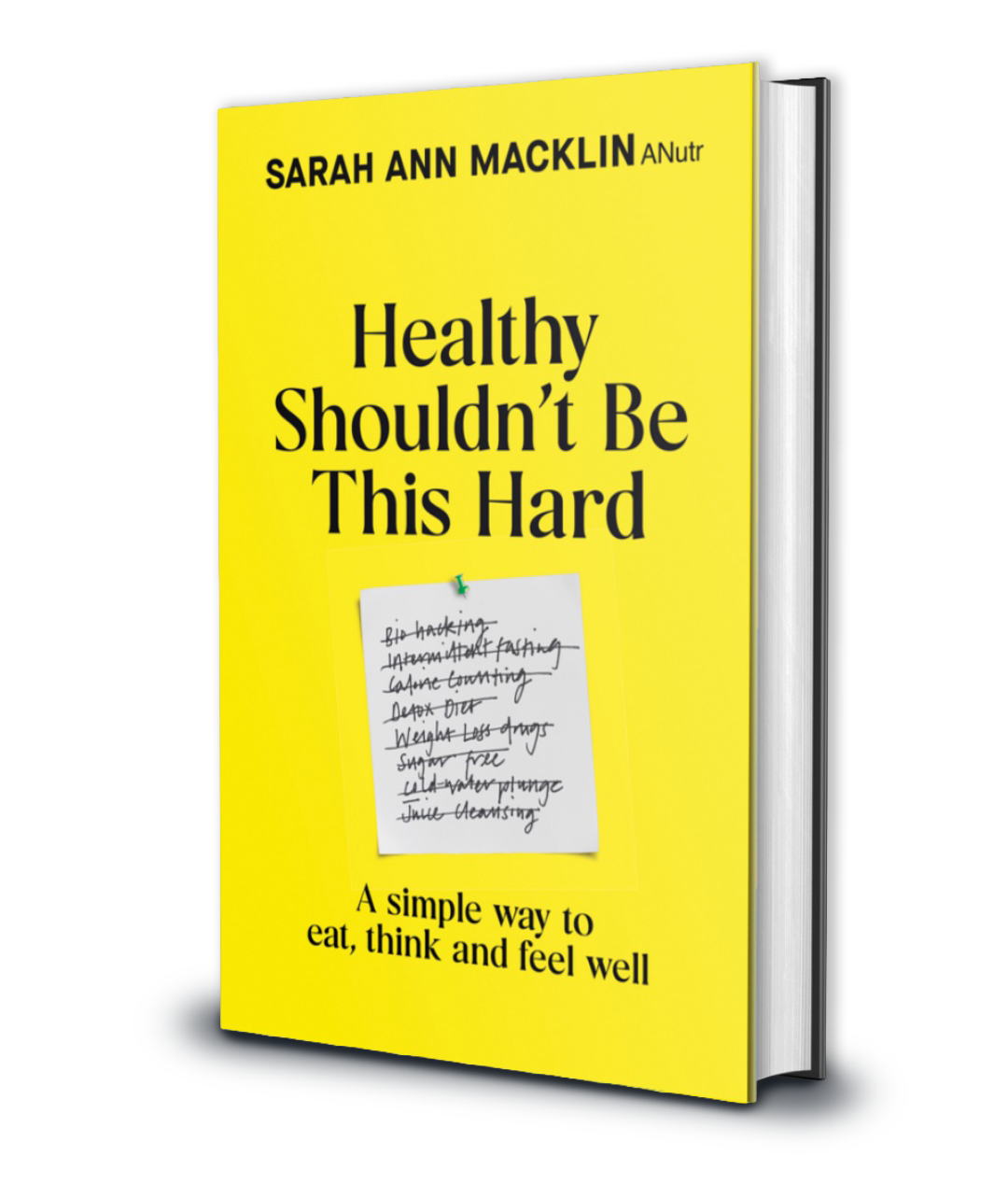
Sarah Ann Macklin's debut book, Healthy Shouldn't Be This Hard, is now available to pre-order. As an award-winning nutritionist and host of the Live Well Be Well podcast, she has spent years asking why—when we know more about nutrition than any generation before us—we're still facing an unprecedented public health crisis. Her answer: we've left ourselves out of the equation entirely. Learning to be your own best ally, not your own worst enemy, is the piece most health advice skips (and something I know a lot of women struggle with).
Join the Super Age Games
The athlete in me always loves competition, and this one sounds particularly interesting. The Super Age Games, due to take place in New York on November 7, is the world’s first longevity fitness competition. Eight trials will test the markers that actually predict healthspan: cardiovascular capacity, grip strength, balance, agility, working memory, functional strength, endurance under load, and relational intelligence. If this sounds like your kind of goal, you can use code NEXTLEVEL for $100 off an Athlete or Champion pass (valid through July 31). You can learn more here.
The Science of Meal Timing in Women
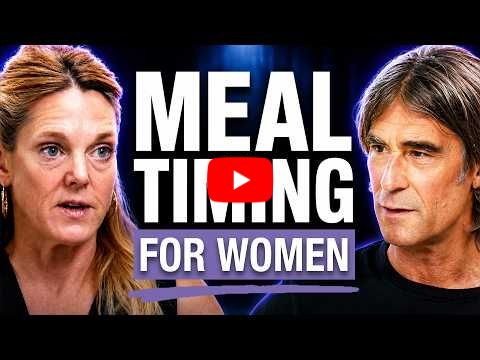
Are you a woman aged 40+ wondering if intermittent fasting is hurting your energy, cravings, and sleep? This clip—taken from my recent podcast with Rich Roll—explores why women’s circadian rhythm and hormone pulses can be disrupted by delaying food until late morning, especially in perimenopause when sleep issues ramp up.
|
Proof of Practice Podcast
I'm one of five co-hosts on a new podcast I think you'll want in your rotation. Proof of Practice brings together Dr. Gabrielle Lyon, Dr. Abbie Smith-Ryan, Gabby Reece, Amber Taylor, and me for the kind of honest, research-backed conversations that usually only happen between us at the end of a conference, not in front of podcast mics. We cover a lot of topics I know you’ll find of interest: strength, hormones, longevity, performance, and everything in between. New episodes drop weekly—and this recent one, on strength training for muscle, brain health, and longevity, is well worth a listen. You can find us on Spotify or wherever you listen to your podcasts.
Until next time,

Forwarded this newsletter? You can join my newsletter community here!